Review: Cabaret by Wonder Theatre, San Antonio
by Donna Provencher
The Wonder Theatre’s Cabaret is certainly not your mother’s Cabaret, nor is it Liza Minnelli’s.
Nor did director Blake Hamman intend for it to be.
This Cabaret is unabashedly dark and atmospheric, unflinchingly sexual and graphically violent — at times to stunning effect, at times at its own expense. One thing is for certain: It will leave San Antonio audiences talking for years to come.
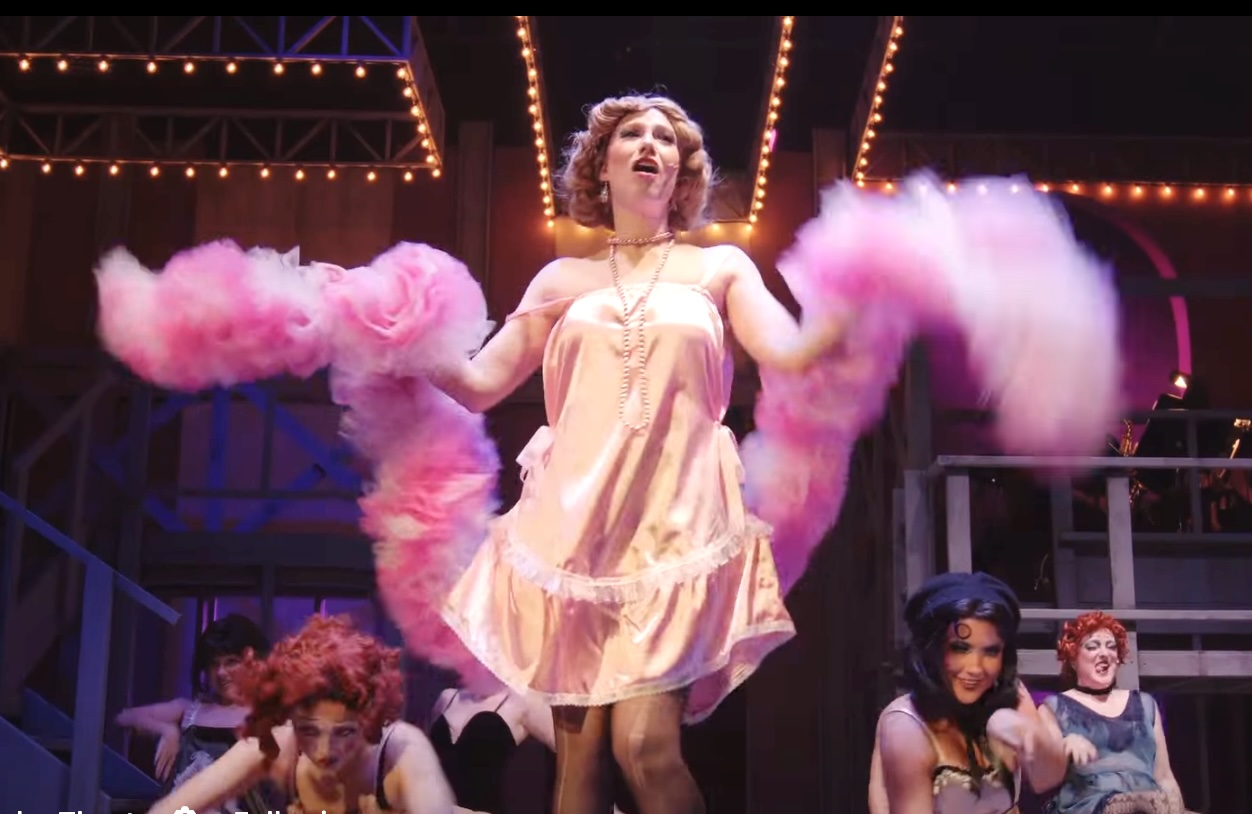
Headlined by Grace Lynn in an unforgettable turn as Sally Bowles, these were performances for the ages. Instead of a descent into madness, Lynn’s Sally starts out stark raving mad and “descends” into clear-eyed lucidity. In perhaps the greatest “Maybe This Time” ever seen on a regional stage, Lynn is restrained, very nearly subdued; the late Natasha Richardson would be proud.
And while in Act I she puts the “manic” in “manic pixie dream girl,” Lynn’s subtly riveting evolution throughout Act II against a backdrop of drunkenness and drug abuse highlights just how tragic the trope actually is.
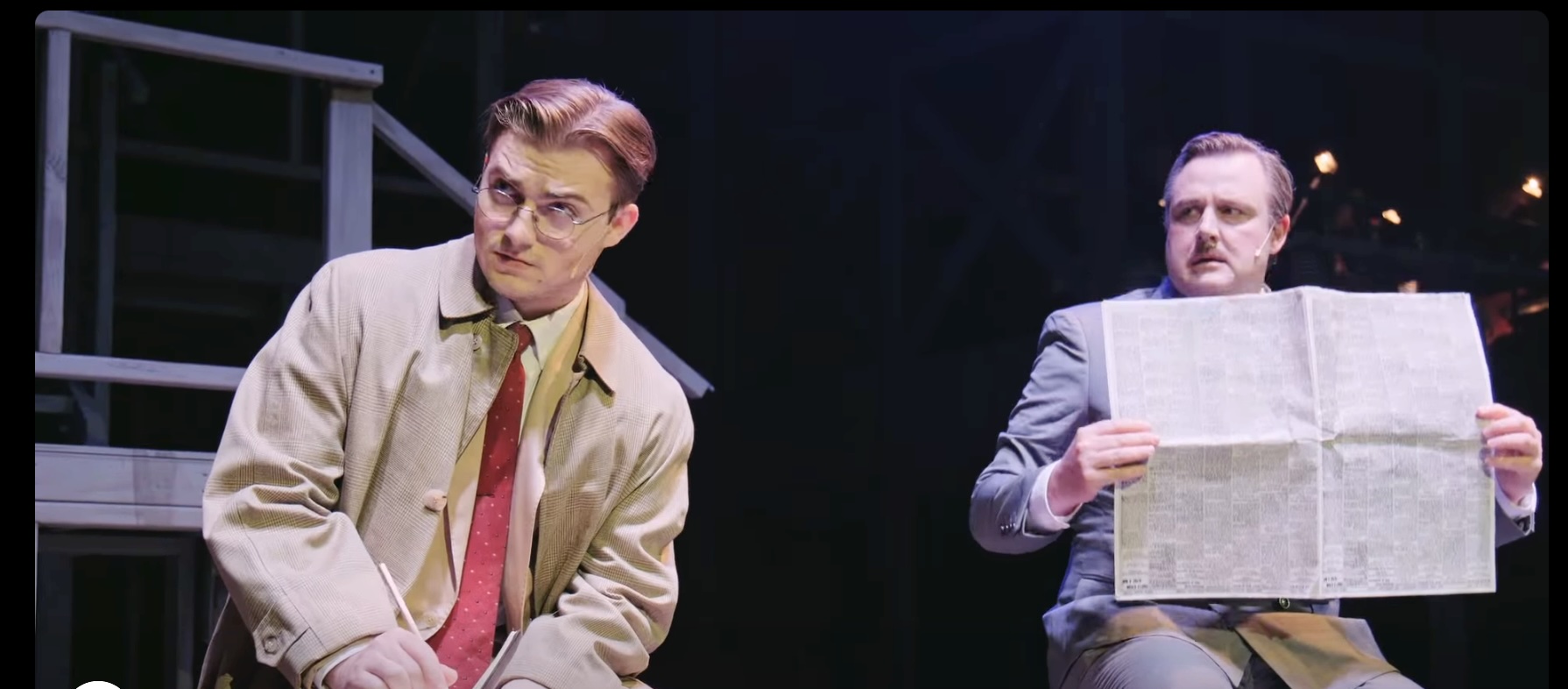
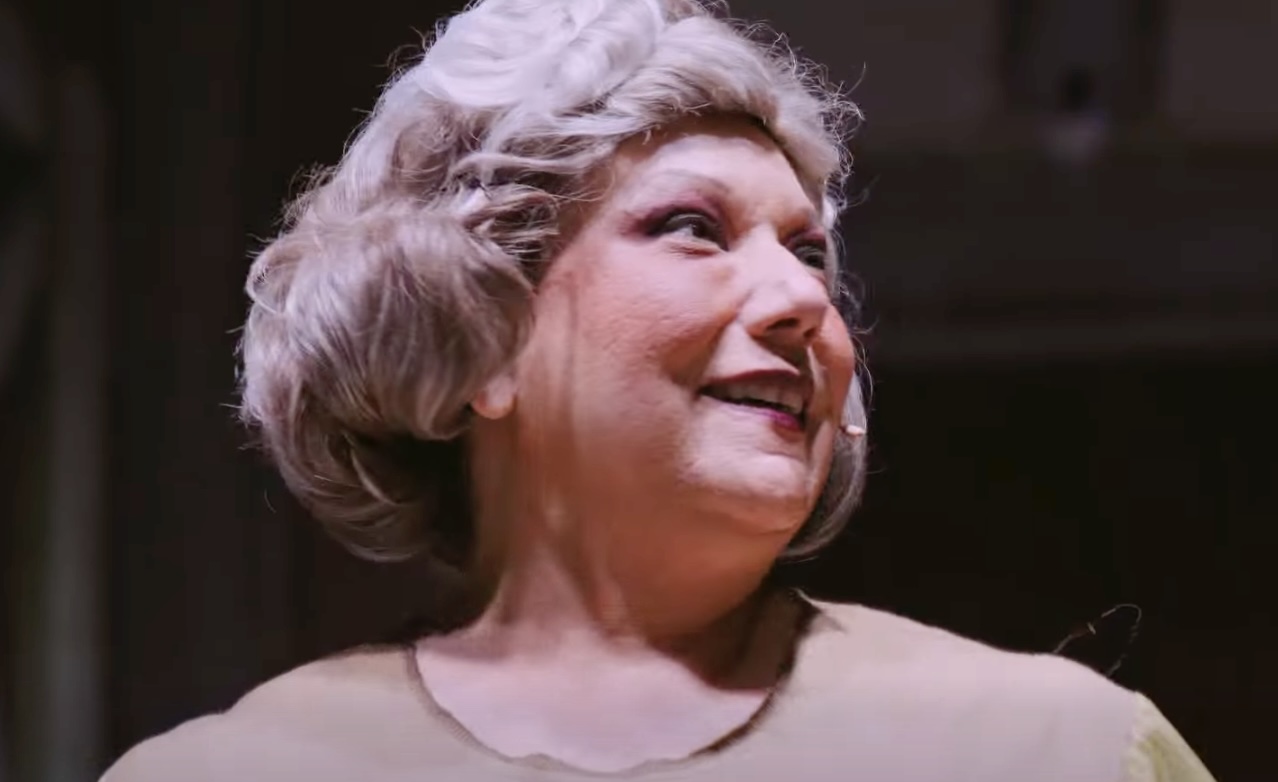 Katy Sisco, the seventh wonder of the San Antonio stage, delivers a tour de force as Frau Schneider, the beating heart of the production. In some productions the Frau is reduced to a tertiary role, but Sisco’s Schneider has a heartbreaking arc all her own — frequently accruing three rounds of applause per solo — and we believe every minute. Their counterparts in Davis Hayes as Cliff Bradshaw and DuWayne Greene as Herr Schultz are in equal parts tender and grounding, and the ensemble is luminous.
Bold and brilliant music direction by Andrew Hendley shapes the show. Alonzo Corona’s choreography is strongest when it remains diegetic, emerging organically from the performers of the Kit Kat Club. “Willkommen” dazzles, and “Mein Herr,” a throwaway number in some productions, is an absolute showstopper. (Puzzlingly, “Perfectly Marvelous,” one of the most typically intimate and non-diegetic numbers in the show, moves at a slowed tempo as it’s transformed into a large diegetic number supported by ensemble dancers.)
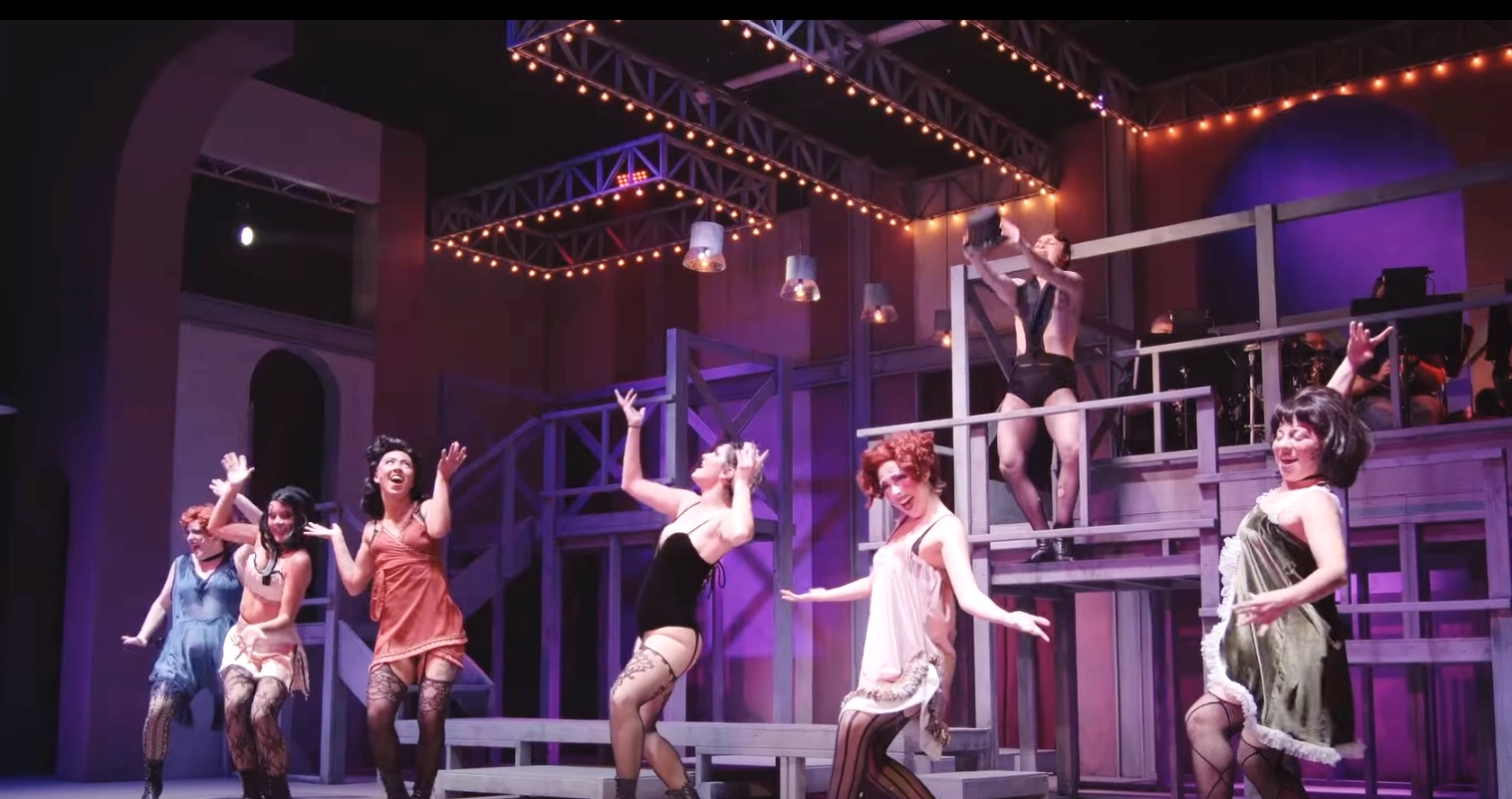
Cabaret is aesthetically brilliant. A labyrinthine maze of double-decker beams provides a versatile framework while gorgeous costumes and evocative lighting transform scene after scene into pure magic.
The graphic content, however, leaves little to the imagination. It’s true you can no more divorce Cabaret from the hedonism of the waning years of the Weimar Republic or the horrors of Nazi Germany than you can ask the sun not to shine. At its core, Cabaret is a show about self-indulgent people deliberately distracting themselves with pleasure and performance art while a great political evil stirs quietly among them.
I have no qualms about sexually explicit content writ large, but it feels heavy-handed here. Cabaret is a musical about fascism, not sex. The script draws heavily from the work of Bertolt Brecht, who wanted audiences to think critically rather than to become entirely consumed by raw impulse or emotion.
Cabaret deals with the commodification of the human condition amid the collapse of civilization. If the audience is preoccupied with three actors working their way through the whole Kama Sutra behind a sheet like human shadow puppets à la “Contact” in RENT or simulating graphic sex acts onstage, the staging can undermine the show’s core political messaging. The goal of Cabaret isn’t — or shouldn’t be — to shock or arouse, but to illuminate the social conditions that led us here.
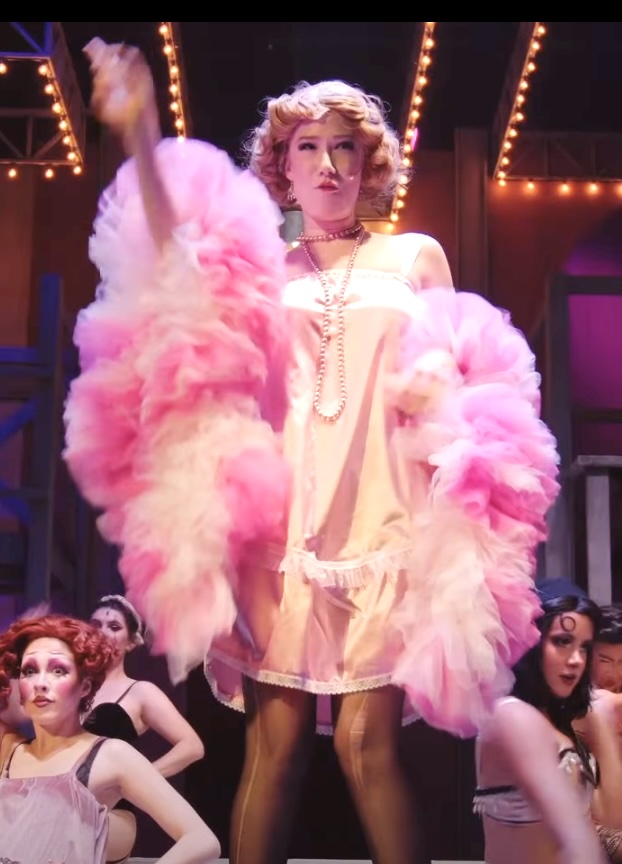 The central themes are political decay, moral compromise, self-delusion and Nero fiddling while Rome burns (or the Kit Kat Girls dancing while civilization collapses). Sex matters in the show only insofar as it symbolically serves those themes. Where erotic imagery asks us, “What does this mean?” this production often substitutes a near-pornographic certainty: “Here is a thing. Look at it — like it or not.”
But explicitness is not inherently courageous. Directors from Peter Brook and Frank Hauser onward have emphasized that every theatrical choice must serve the story first. With Cabaret, there’s a fine line between a mounting evil that demands unflinching depiction and a sort of gratuitous shock-jock, Oscar Wildean “art for art’s sake” excess. Director Hamman has largely erased this line.
Most notably, we see this in the Emcee, portrayed with boundless energy and beautiful vocals by Jackson Gable. The character’s iconic whimsy and gender-bending camp are largely abandoned before the close of Act I. The framing figure of the Emcee transitions too soon into a sneering Nazi villain, goosestepping in jackboots with nowhere left to devolve.
Likewise,“ Tomorrow Belongs to Me” is sung as Fraulein Kost (the immensely talented Kayla Hernandez Friend), who is sexually ravaged onstage by a Nazi soldier. Is it titillating and visually jarring? Absolutely. Does it distract and detract from the point? Also yes.
This same treatment is evident throughout the production. From the first notes of “If You Could See Her” the Emcee berates and bludgeons the gorilla in a series of human-on-monkey hate crimes rather than building the number so the infamous “She doesn’t look Jewish at all” punchline can land with blunt force. During “I Don’t Care Much” ensemble members change his costume into a literal Nazi uniform with swastika armband. Cliff hurls Sally clear across the room over her political and personal apathy. Sally violently pregnancy-hurls projectile vomit at the apex of “Cabaret” moments before her abortion is disclosed at the train station. In the final moments of the show, the Emcee, clad in full Nazi regalia, beats uniformed concentration camp prisoners and forces them into a visibly smoking gas chamber.
It is all very bleak and unsubtle, and without a doubt was meant to be just that. But it also feels calculated for maximum shock value.
One can’t help but think of Alfred Hitchcock, who preferred implied over graphic violence. Hitch argued that audiences will create in their own minds something far more terrifying than anything a director could put on screen. When everything is explicitly stated, sometimes nothing is actually said. If an audience already understands what is happening, graphic depiction adds little while reducing tension — and once something is made literal, it often stops functioning as metaphor.
There’s no denying that director Blake Hamman is a prodigious local talent; he is also an unapologetic provocateur who occasionally sacrifices substance on the altar of style. A somewhat more restrained hand and greater faith in the simplicity of the story and the intelligence of the audience could at times have served the story better.
Still, there is also no denying that this Cabaret is the toast of Mayfair, an aesthetic feast of powerhouse performances, riveting spectacle and top-notch craft.
Nor that if Hamman's goal was to make people think, it accomplished exactly its job.
Cabaret
by Kander and Ebb, based on Christopher Isherwood's stories
Wonder Theatre
May 22 - June 14, 2026
Wonder Theater, San Antonio