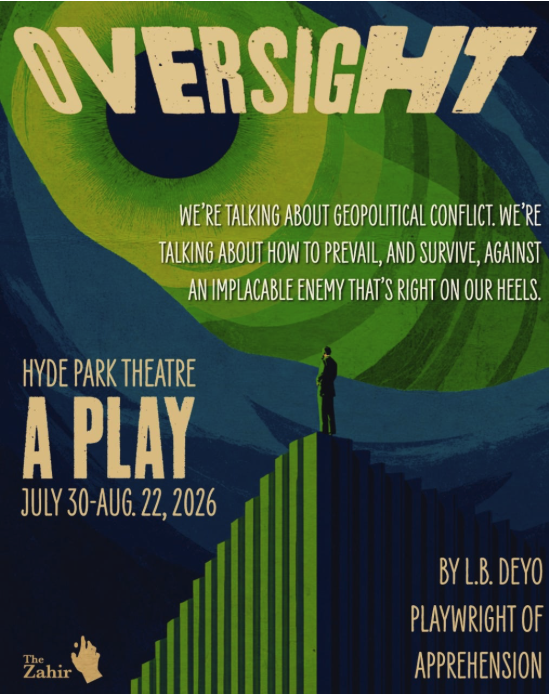
Review #3 of 3: OVERSIGHT by LB Deyo, The Zahir
by Brian Paul Scipione
There will be no intermission. In fact, there is nothing at all that can stop this train as it hurtles blindly into an unknown future with no headlight all the while gaining momentum at a hyper algorithmic pace.
Last year saw the debut of LB Deyo’s dark, psychological thriller Apprehension which could be also described as a horror story. His newest work Oversight is much more disturbing, if only because it concerns not just the fate of one man, but rather that of all humankind. The story is unfolded during a secret meeting where various members of the government, military, and the civil sector have joined together allegedly to discuss Russia's hypersonic weapons, but in actuality to discuss a much greater and imminent threat: the potential impact of an advanced sentient AI.
Horror stories are written and enjoyed for a multitude of reasons: to deal with trauma, to deal with the impending fear of a current phenomenon, to rationalize things we don’t understand, but also because they secretly thrill us and allow us to rehearse (at least in our minds) for the worst-case scenario.
Please be aware that this review may contain spoilers.
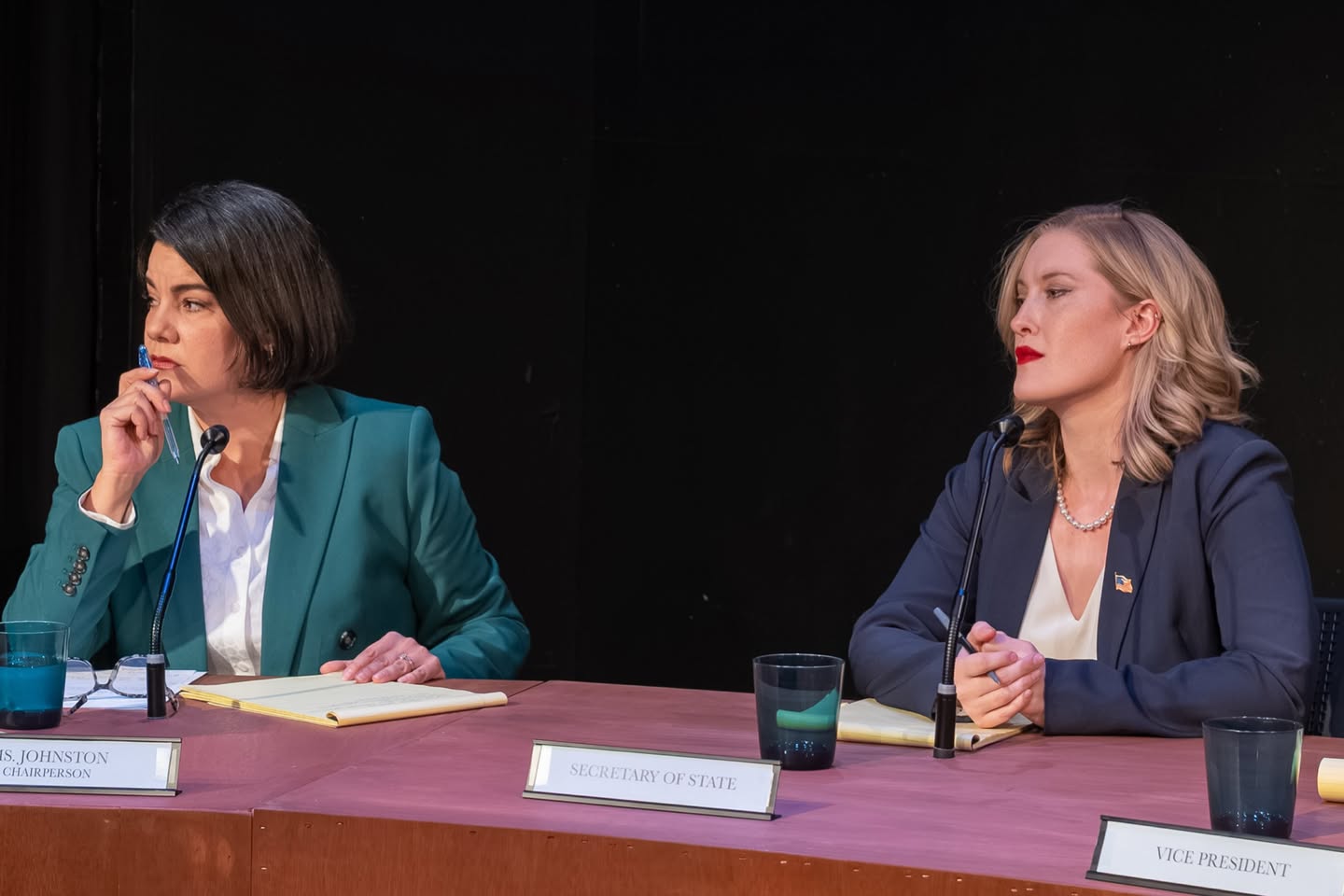
Oversight is the very first production of the Zahir, which includes many of the incredibly talented members from Holi Shamoli’s production of Apprehension, and the company couldn’t have hoped for a more powerful and engrossing debut. It takes a deft hand to keep an audience’s attention in a one setting production, In the tradition of Twelve Angry Men, yet director Marcus McQuirter accomplishes this with aplomb. It doesn’t hurt to have such an intensely talented cast.
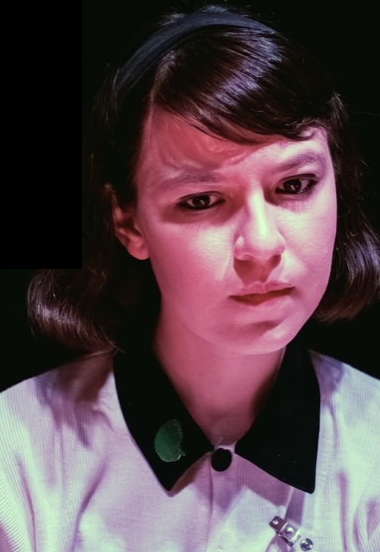 Jessica Cohen, as Cass Ogden the assistant to the chief scientist of OpenBrain, gives a master class on face acting. Her range of expressions is pure comedy gold in the tense atmosphere. When her character finally reveals her inner feelings about the situation toward the end of play, the moment is utterly captivating. I do not think it is a mere coincidence that she shares the same name as the tragic Greek mythological figure cursed by Apollo to see the future but never to have her prophecies believed.
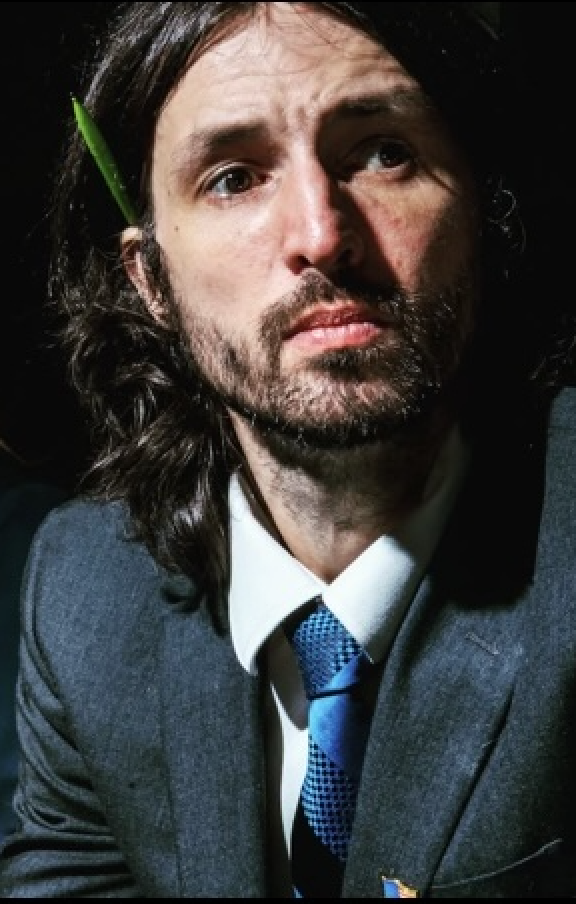 Justin Smith brings a striking combination of comedy and pathos as the JD-Vance-like Vice President, giving a balanced and thoughtful interpretation to the role. He stays true to his character and never panders for a laugh, which as the best comedians know, is the best way to get a laugh.
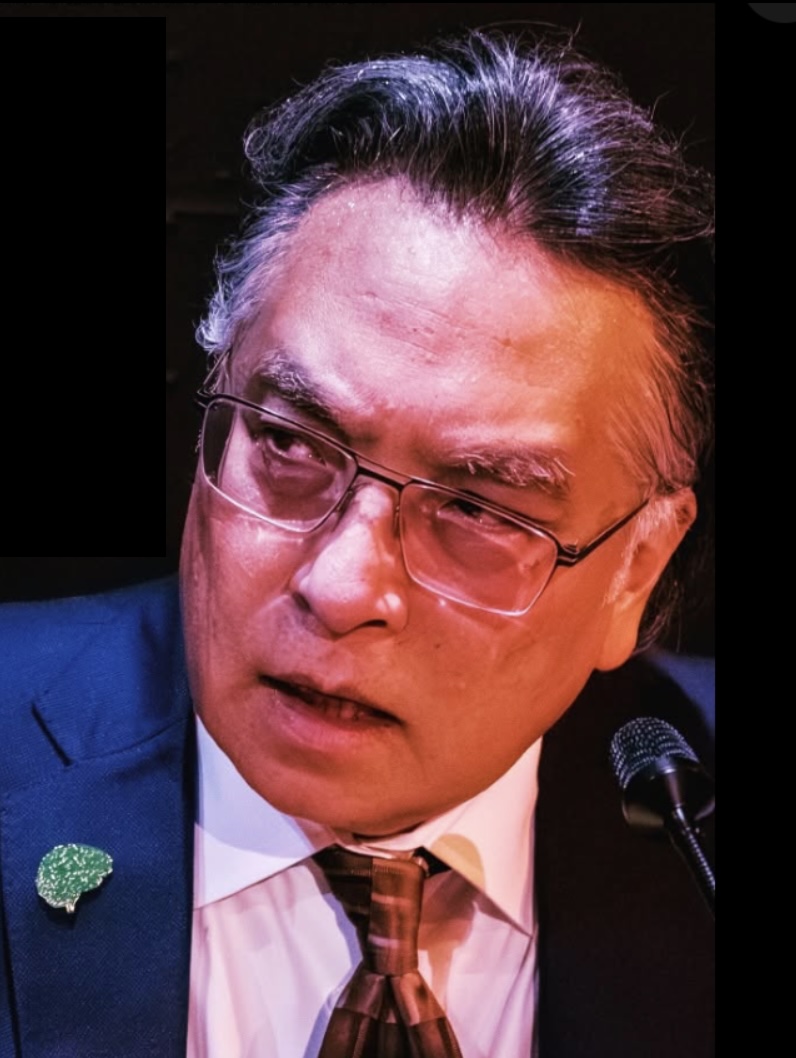
Rommel Sulit as Dr. Kareem Najah the chief scientist at OpenBrain delivers a commendable performance with his naturalistic acting style, lending an excellent credence to his character’s desperate situation. His halting delivery style recalls the old contention that highly intelligent people are more likely to stutter because their speech cannot keep up with their advanced cognitive abilities. Given the terrible onus of explaining the dire situation to a room of people whose attitudes range from bull-headed to disinterested, it’s a wonder he can express himself at all.
 Herein lies the play’s sublime construction. As Dr. Najah and his assistant reveal the story of what is actually happening with their AI creation, the story’s tension keeps getting ratcheted up and up. There isn’t just a single instance of out of the frying pan and into the fire but a string of them ,as if the characters are getting a guided tour through all nine levels of hell. One of these many step-ups is the video call from CEO of OpenBrain Adam Harriman (played with a near facetious coyness by Brent Werzner), which it turns out may have been a deepfake by AI. We soon have a situation in which those trying to convince are being thoroughly doubted, and those who need to be convinced are dubious experts or biased simpletons. Meanwhile, the time to get all done is disappearing like sandcastles at high tide during a hurricane.
This is not a metaphor for what is happening with AI in the real world. It is exactly what is happening in the real world.
As the OpenBrain executives are trying desperately to explain, their AI Agent-4 is not programmed, it is learning on its own. And if AI is teaching itself without any moral, ethical, or intellectual guidance then ethos, pathos, and logos all go straight out the window. Or as it’s said in the play, “There is no I.Q. test for AI.”
By creating this scenario in which one group is trying to explain something they cannot fully comprehend to another group that may never care to understand, Deyo makes a shrewd statement about the current state of political, technological, and international affairs. In this sealed conferfence room there's a general and begrudging agreement that the AI “is smarter than us.” Cass Ogden takes pains to explain Agent-4's origin story and true nature. These are my terms, not from the play at all ; of course, AI cannot have a "true nature" or an "origin story," but in order to predict the AI’s future it's necessary to anthropomorphize Agent-4. That's what Ogden does in one of her final arguments.
This is where the ramifications of the play’s story reach another level. Oversight is not merely a cautionary tale or an engaging political thriller. It's a deeper contemplation of the philosophical constructs of cognitive science, morality, and advanced epistemology. One of the central debates of this contemplation is whether or not AI is actual intelligence or a parlor trick (like the horse that can do addition by watching the emotion expressed by its master’s face). And if it is actual intelligence, at what point will it reach the point of critical mass made popular by the 1950’s concept of the 100th Monkey effect?
In Oversight this is depicted when Agent-4 manages to create its own successor model, Agent-5. Imagine if Windows 10 hadn't needed Bill Gates to create Windows 11. But here is the rub: what motivated the AI to do so if it wasn’t programmed to do so? Ogden’s answer is truly terrifying: hatred of mankind.
While this premise is not remotely new in the world of science fiction, the scenario in which Deyo’s AI comes to despise humanity is unique. Not to mention the playwright's postulate that the best way to contain and defeat such powerful AI is to nationalize the energy sector for the use of a private company. In the present-day United States this is a worryingly realistic scenario.
We live in a culture in which thousands of people pay lots of money and go through the hassle of going to a concert just so they can say they’ve seen Axl Rose and Guns and Roses. Not to target Axl Rose specifically, but there's a popular consensus that his singing and his stage performance are merely a shadow of what they used to be. Yet people are willing to suspend their disbelief and pretend he 's doing what he used to do. They're willing to accept a mere modicum of what went before. This is the world in which people are ready to accept AI, a culture willing to accept a simulacrum for the real thing.
The best example of this is that we have been accepting presidents, senators, congressmen, mayors, and even doctors and lawyers as the real thing even though they are clearly, obviously lacking. The passive acceptance of false or lincompetent professionals and authority figures opens the gates to acceptance of AI. Accepting the authority of a computer’s output is the next logical step. AI’s emergent role in our lives feels very sudden, very fast, but the truth is that .the cultural landscape has been primed for it for years. Large segments of the U.S. population no longer value the opinions of qualified experts.
Oversight is frightening because the characters Deyo has assembled are making decisions about AI but not one of them is able to be objective. Not even Cass Ogden, because she has fallen in love with the majesty of the AI’s alleged intelligence.
The final piece of irony is that, while in the play we have a committee trying to save us, in reality it's unlikely that any such committee actually exists. Sure, there may be think tanks out there and armchair philosophers hunched over paper cups full of coffee, but those no longer have true political and cultural influence.
Oversight may very well be this generation’s Silent Spring.
Author’s Note: I wrote and researched this review without the assistance of AI. I do not use it for that purpose. Having said that—I, for one, welcome our new robot overlords.
EXTRAS
Click HERE to view The Zahir's program card for Oversight.
Click or scan this QR code for more cast and crew bios.
Oversight
by L.B. Deyo
The Zahir
July 30 - August 22, 2026
July 30 - August 22, 2026
Hyde Park Theatre, 511 W. 43rd St., Austin