Review: Rara Avis by Ishida Dance Company
by David Glen Robinson
Ishida Dance returned to Austin with thier new show Rara Avis and a plan for partial basing (with Houston) right here in river city. The show is fresh, indeed, with four dances, one of them popular in Europe, and three world premieres. Concept, choreography, staging, and performance were brilliant, without the lighting and sound glitches that plagued last year’s show at St. Andrews in west Austin.
Dell Hall at the Long Center is a mighty supporting arm for any fine arts effort staged there and did not disappoint. One hopes Dell Hall can become Ishida’s Austin base of operations.
The company performed Rara Avis two nights last weekend in Houston. It took place one night only in Austin, January 23rd., 2026.
I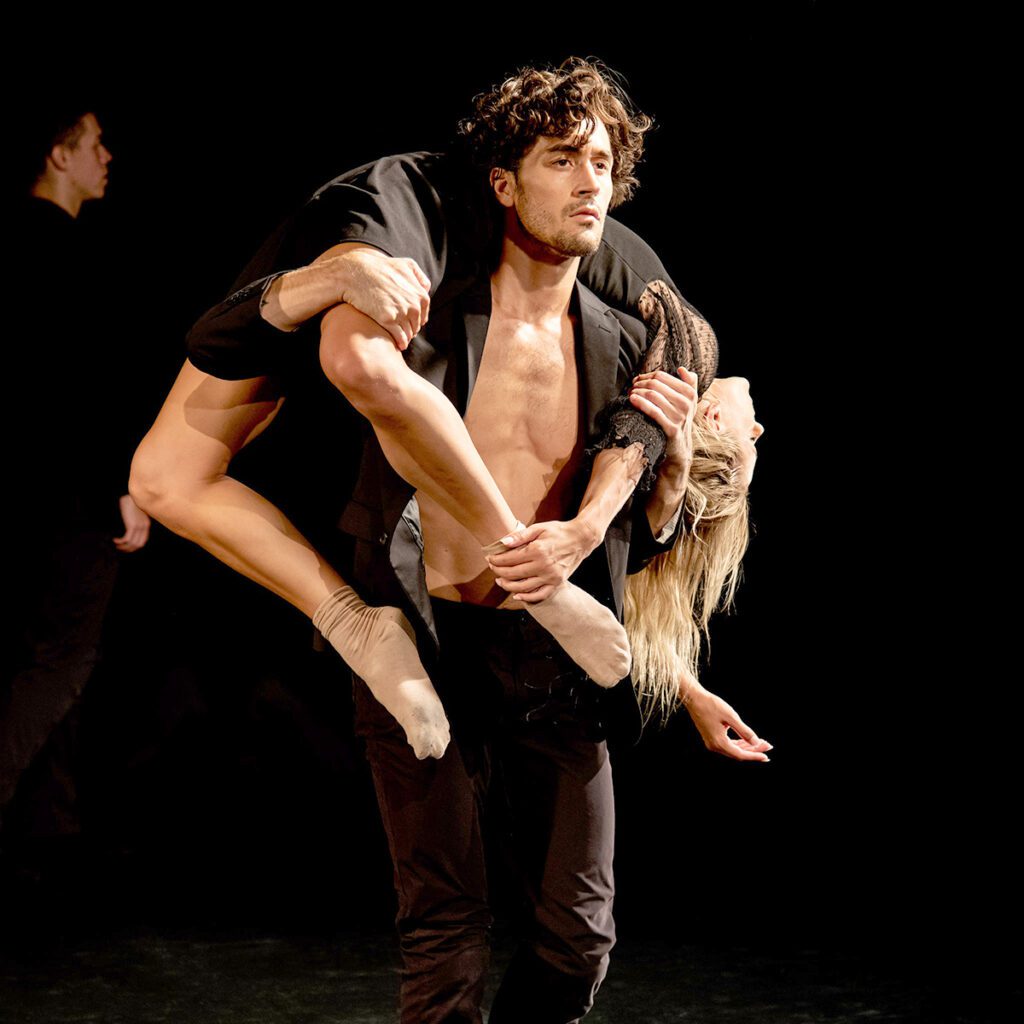 shida’s dance is based in ballet, given the backgrounds of the dancers, but the choreography and movement on stage are contemporary dance with strong balletic inflections. Most labels in the performing arts are imprecise and annoying to the artists categorized. That very imprecision may suggest why artists pasted with those labels are pursuing new creative directions. So it seems with Ishida Dance. This review gives attention to all four of the dances.
Edward Clug, a native of Romania, choreographed “Mutual Comfort,” the first dance. Clug, an experienced dancer and choreographer, created the work for Nederlands Dans Theater a few years ago. It has been featured in festivals and theaters across Europe. Clug was not in attendance. This piece for four dancers gave us high energy and frenetic, usually rhythmic, rapid movements of every body part. Fast motions were interspersed among slow head and neck movements, repeated by drop-focus dancers not engaged in a duet or solo. The lighting was generally low, giving this signature movement by otherwise motionless dancers an unnerving, almost threatening quality, perhaps like beasts on a darkened plain. The focal movements were by dancers in numerous cross-sex and same-sex pairings.
In our current late feminist age, many are uneasy at the sight of males dragging recumbent females across parts of the stage. In at least one instance a female was thrown cross a recumbent male body. To be fair, females lifted and pushed males a few times also. Floorwork with contact may be the real culprit, giving an undertone of sexualized abuse regardless of the gender pairings and actual movements. This unsettling quality and the generally frenetic movement made one think a title more apt than “Mutual Comfort” would be “Mutual Anxiety.” The disciplined, professional dancers were Kenedy Kallas, Nicholas Bustos, Thomas Martino, and Mimi Lamar.
“Rara Avis,” a world premiere choreographed by Brett Oshida, gave its title to the entire show. The dance told an interior story of considerable depth with ringing truths about those with artistic ambitions. In this sense, anyone with a grain of talent is a rara avis ("rare bird"). The the dance narrative showed the struggle of a musician and a singer, portrayed by Corah Abbott attempting a comeback after a time away.
Her struggle was immense. The most heart-wrenching moment was the first one, when the singer stood at a microphone downstage left, under a bright spotlight as in a concert hall performance, and nothing at all came out. Sheer silence. And the silence lengthened in time. The audience had no difficulty in sensing the existential crisis in that.
The rest of the dance was taken up with the dancer's struggle with her inner demons, whom in her curtain speech Ishida identified as her doppelgangers (Alice Del Frate, Renee Kester, Maddie Medina, Chiara Pignataro, and Kenedy Kallas). One by one, they came out of the darkness and lined up behind the singer at the microphone. That choreography gave crystalline clarity to the nature and roles of the five figures.
The singer retreated but somehow found the strength to struggle. The doppelgangers, or demons, or witches, or monsters from the id, or whatever they were, stood costumed identically in floor-length black gowns with a hip-high slit. Those flowing gowns transformed variously in the doppelgangers' athletic performances, all choreogrpahed to show the many ways one can self-sabotage.
The list of ways included obsessions with styling and fashion, both female and male. Behavior demonstrated insecurities. A full-length mirror set at an angle on stage served as the place for the doppelgangers to take turns preening and fretting over their hair and clothing, all in a performance way, of course. A favorite passage was where the doppelgangers, in unison but spaced across the wider stage, removed tubes of lip gloss from their clothing and proceeded to smear the waxy makeup on their faces, a minor trope we would otherwise expect of a Pina Bausch dance.
Much of the dance of the doppelgangers was closer to contemporary dance than to ballet, but with plentiful floorwork and ballet gestures including high kicks and spinning turns. The dance continued to a happy ending. There was no definitive defeat of the rare bird’s inner demons but rather a peace treaty of sorts, allowing her (and all of us) to accommodate flaws and continue the search for success. This was brilliant work.
Brilliant but not perfect. The full-length mirror set at an angle on the stage reflected the signature scintillating blue lighting set of the doppelgangers ,like some sunlight weapon of Archimedes, directly into the audience at house right. More than a few ticket buyers complained to this reviewer that they'd been obliged to turn away or shield their eyes. One may wrestle and accommodate one’s inner demons, but one also must accommodate the audience.
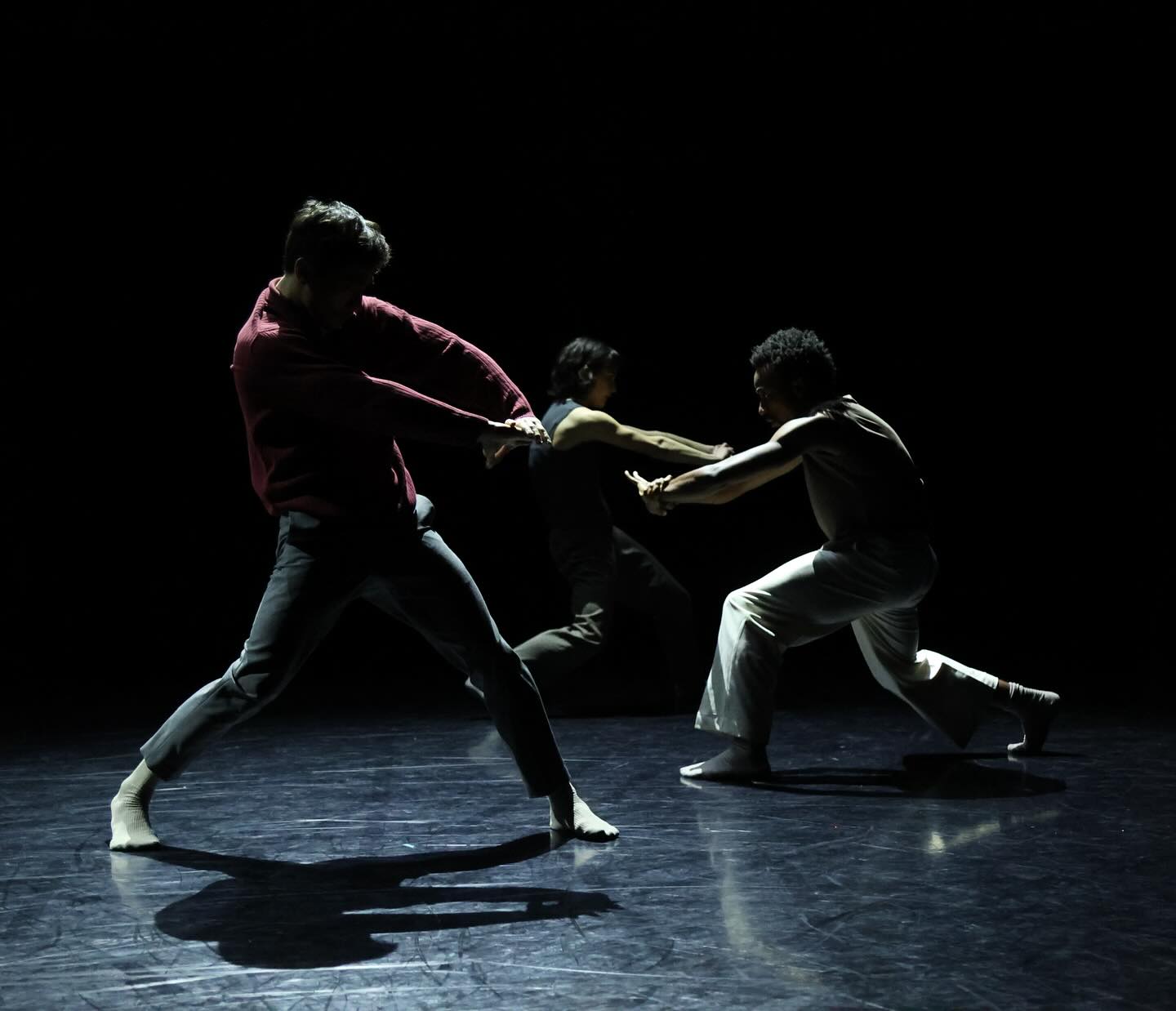
“Let’s Not Talk about It” is a world premiere dance choreographed by accomplished Finnish dancer and choreographer Kristian Lever, who has done work all over Europe. The curtain speech and discussion alerted the audience that the piece was a combination of dance and acting, performance art described in the program as “Told through dance, lip-sync, and stylized vignettes.” The piece as observed certainly delivered its multimodal eclecticism and was impressive for the work that went into its embraced complexity. And as typical for this show, the results were artistically brilliant.
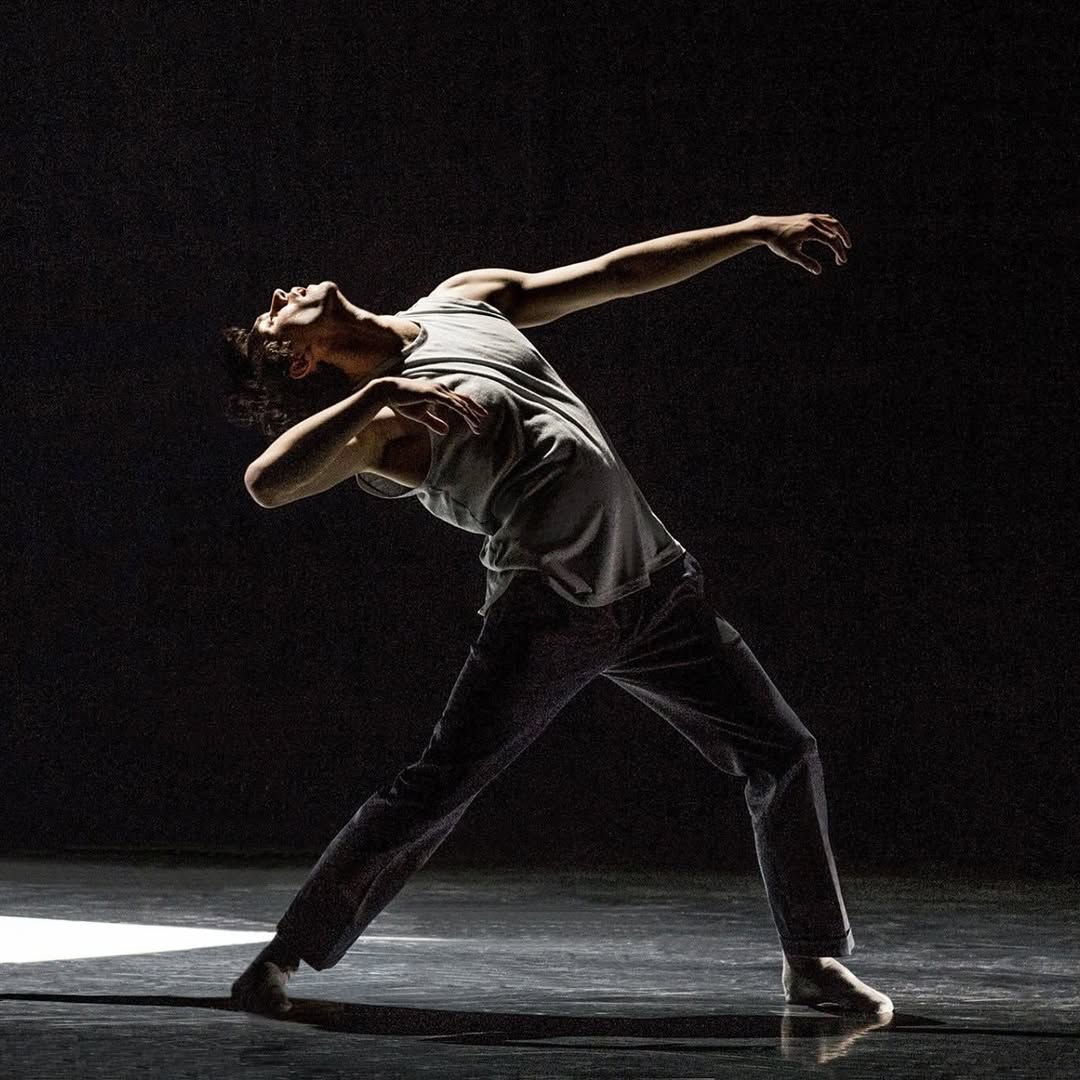 A story dance, "Let's Not Talk about It" was a dinner gathering of friends in various relationship configurations. Incidents deflect the proceedings, notably a mysterious phone call, and the characters relations reveal themselves. An announced theme of the dance was lying, mendacity both to ourselves and others, to protect or escape lovers and families. And the piece took us to the consequences of prevarication as well. The spoken word theatrical parts explained the outward behaviors, and the wordless focal dances expressed the interior motivations and turmoil.
The dance featured much floorwork, often under harsh lighting, and strenuous but expansive release and change. The dances were particularly well expressive of emotional agony and uncertainty. Choreographer Lever in one thematic focus of his work captured perfectly the differences, inflections, nuances, and subtleties of gay relationship building. Kudos. The performers were Michael Arellano, Adrien Delépine, Alice Del Frate, Renee Kester, Madie Medina, and Jonathan Paula.
The design work for “Let’s Not Talk About It” was noteworthy. The lip-syncing, usually with mismatches around the edges, was undetectable by this reviewer. One wonders if it actually took place. All spoken lines, however, were crystal clear. Yet the performers did not seem to have body mics. One wonders if Dell Hall has an area microphone system. Kudos to the successfully invisible sound design of “Let’s Not Talk About It.”
“His Letter,” a world premiere choreographed by Brett Ishida, was a personal riff on the theme of communication. The piece showcased Ishida’s ability to choreograph sheer beauty. This poetic tale of love, exploitation, and redemption was headlined by a semi-crumpled, paper letter that flitted about the stage, on and off and on again, sometimes fleeting, sometimes insistently in the face. The dancers were Nicholas Bustos, Kenedy Kallas, and Thomas Martino. The duet between Kallas and Martino reminded us in some ways of the violence in the duets in “Mutual Comfort,” for it was by intent a dance of exploitation, perfectly and athletically rendered by Martino and Kallas. The exploitation had been uncomprehended until revealed by the letter: the duet showed us in dance what the letter recipient had been going through. It was a marvelous performance. But the letter itself was the star of the show, a picaresque figure always interrupting lives constantly in progress, always punctuating the chapters of love lived by people.
We’ve all written or received that letter. Think back, you’ll remember. Ishida will help you.
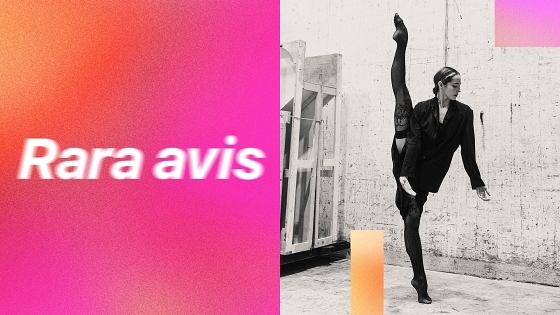
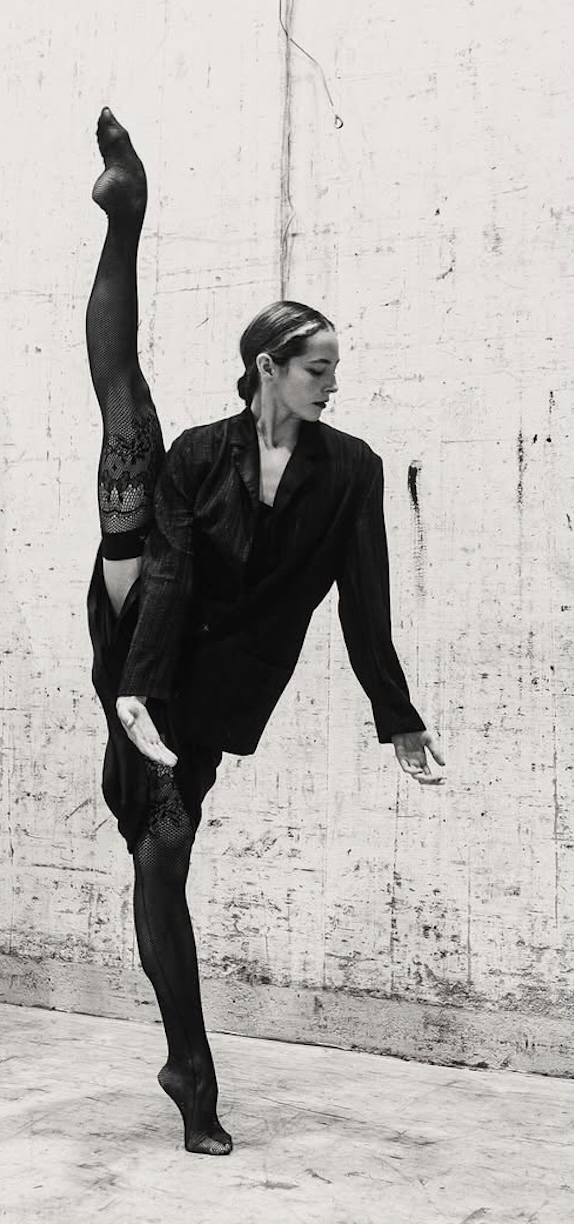 The choreographers and dancers, although not all on the same continent at once, constituted a company unified in their dedication to Brett Ishida’s choreographic visions and style. Their work on stage was perfectly in unison and correctly timed.Though only a few dancers can be recognized in this space, all were standouts. Kennedy Kallas showed perfection of technique, including the photograph in the promotional material of her outer space-tickling battement en relevé. She did yeoman work to perfection in three of the four pieces of the show. Mimi Lamar matched Kallas in upper body costume, form, and figure in “Mutual Comfort.” Lamar easily matched the dance of the male performers in the high energy European style of contemporary movement. Corah Abbott, indeed the Rara Avis, showed easy mastery in multiple modes of fine art, those being dance, acting, and musical performance.
Rara Avis gave us a two-hour evening of luscious and exciting movement, intriguing design work supported by the Dell Hall, live music, thought, love, and hope. Ishida Dance, addressing themes evocative of Pina Bausch and deeper than those in recent work by Mark Morris, moves along many pathways toward a potentially bright future of dance in the world. We are past welcoming Ishida Dance to Austin; now we are begging Ishida Dance never to leave.
Rara Avis
by Ishida Dance
Ishida Dance Company
January 23, 2026
January 23, 2026
Dell Hall, Long Center, Austin