Review: The Look of Love by touring company
by David Glen Robinson
The Look of Love, choreographer Mark Morris’s long-touring dance and music show, is a monument of popular music and postmodern contemporary dance. The show, presented one night only at the Bass Concert Hall, the main facility of Texas Performing Arts on the UT Austin campus, amazed us with its artistic directness, and dances set to iconic works of popular music. The show was based in simplicity—walking paces, repeated arm gestures, straightforward entrances and exits---the kind that can only come from mastery. After several decades in the field of dance, Mark Morris gave us the fruits of his mastery.
The performance used music from the lifetime of work by Burt Bacharach (1928-2023). Morris first staged it in New York and Washington in 2023. These hits, strung out from the 1950s through the 1980s, threw almost everyone in the Bass into reveries of their childhood and youth. Bacharach’s songs gave singers B.J. Thomas, Dionne Warwick, hits that drove successful careers. Bacharach and collaborator Hal David effectively discovered Warwick and made her a star. Her records, largely of Bacharach/David songs, soldmore than 12 million copies. Warwick hits on the Bass program included “Walk on By,” “Anyone Who Had a Heart,” “Alfie,” “I Say a Little Prayer,” “I’ll Never Fall in Love Again,” and “Do You Know the Way to San Jose?”
The show’s presentation was simple: Morris’s dances set to Bacharach/David songs performed live by a musical ensemble, led by fantastic, powerful singer Marcy Harriell. The musical ensemble played in front of the proscenium, keeping sightlines to the stage clear. The first number, “Alfie,” was entirely musical, played before the curtain, no dance.
“What the World Needs Now” followed “Alfie,” and the dance was something of a historical throwback to a major theme of Morris’s earlier work. The dance proceeded from a circle dance, a form explored by Morris when few other choreographers would touch it, notably in the 2013 Bass UT performance. Circle dances are an ancient cultural form, said by some prehistorians to be the earliest identifiable human artistic expression. The current exploration showed varieties of movement, including couples circling each other, matched symmetrically on the opposite side of the circle. Other groups broke away from the circle, creating forms, shapes, and gestures, almost kaleidoscopically; but unlike that children’s toy whose shapes are unendingly varied, the Morris dancers always returned to the circle. The dance was the only performance of the show based on a circle save for a few tableaux of people sitting in chairs.
Mark Morris is known as one of the first postmodern choreographers, a phase in the arts that embraced deconstruction, breaking concepts down creatively to find the new and take new directions. Morris’s earlier “The Hard Nut,” a deconstruction of Tchaikovsky’s “The Nutcracker Suite,” was a milestone of the contemporary changes in American performing arts and a somewhat tongue-in-cheek sendup of classical ballet. The musicians and dancers in The Look of Love thoroughly deconstructed “Raindrops Keep Falling on My Head,” singer B.J. Thomas’s claim to fame, to create a near-original and beautiful dance. For what seemed like minutes, the singers (Harriell and backup singers Clinton Curtis and Blaire Reinhard) sang the single lyric “Raindrops” repeatedly in a variety of timings, voices, tones, and pitches, while the dancers entered in gestures of people looking for rain, recoiling from rain, or as abstractions of the raindrops themselves. The pacing sped up through a joyous rain shower.
“Do You Know the Way to San Jose”? was the most literal story dance to a Bacharach/David song in the show, no deconstruction here. The choices for everyday gestures, pantomiming, were clever—pumping gas, sticking out a thumb to indicate hitchhiking after buying an LA car, and others.
Late in the show “The Blob” brought something refreshingly different. A lighting set turned a mass of dancers in a pyramidal shape into a mass of dark gray and steel blue colors against a dark red background. The image shimmered. The singers sang a song like a horror story, ending with a roar. It was something vastly different from what had come before.
“Always Something There to Remind Me” was a dance full of pantomimed relationships, but romantic sentiment was unavoidable given the song lyrics. Bacharach gave or marketed the song to the 80s alternative band Naked Eyes, who turned it into their greatest hit, sentimentality intact.
The Look of Love” was also unavoidably romantic, with a dance twist. Variously, Karlie Budge and Billy Smith would come together as though meeting. They made a gesture to each other of straight, downward-spoking arms, first to the left, then to the right, followed immediately by turning and running upstage, always on the lyrics “forever, and ever…” The spoking gestures were abstracted but unmistakable references to the feathery mating dances of birds. Then, at the peak of the song and the dance, the full ensemble of ten dancers came together and in unison made the same gestures to the audience. "Spectacular" can’t quite describe it.
Lead singer Marcy Harriell sang with great variety in her voice for almost the entire 65 minutes of the show. Her standout songs were “Message to Michael” and “Anyone Who Had a Heart.” Her “Walk on By” was almost as poignant as Warwick’s immensely popular version. Harriell’s standout curtain call turn was well justified. Kudos.
The ensemble of ten dancers showed immense talent across the board. Their ensemble cues were perfect and were never off in timing. This is to be expected after having toured The Look of Love for upwards of two years. They are Mica Bernas, Karlie Budge, Sarah Hillmon, Courtney Lopes, Dallas McMurray, Alex Meeth, Brandon Randolph, Christina Sahaida, Deniz Erkan Sancak, and Billy Smith.
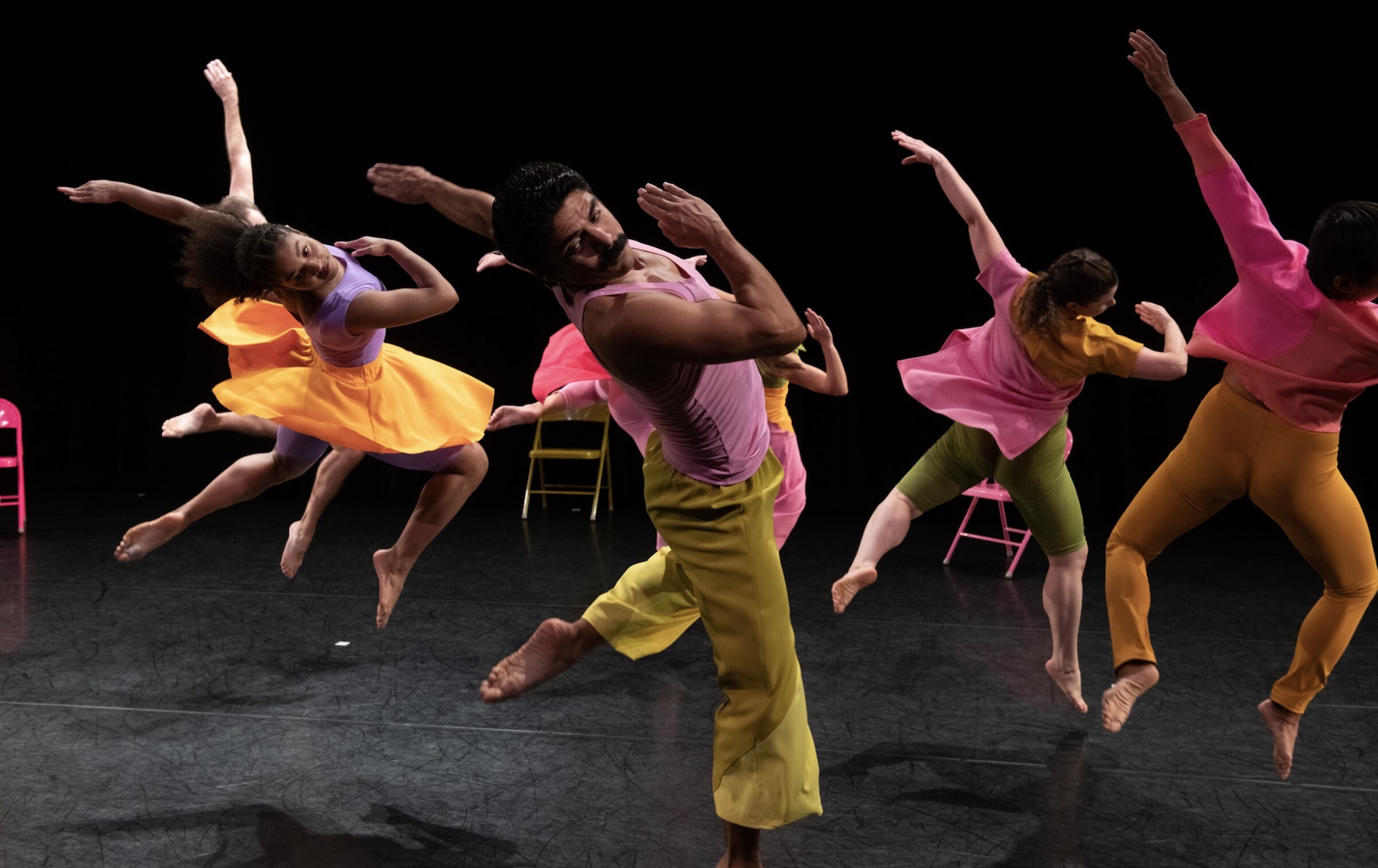
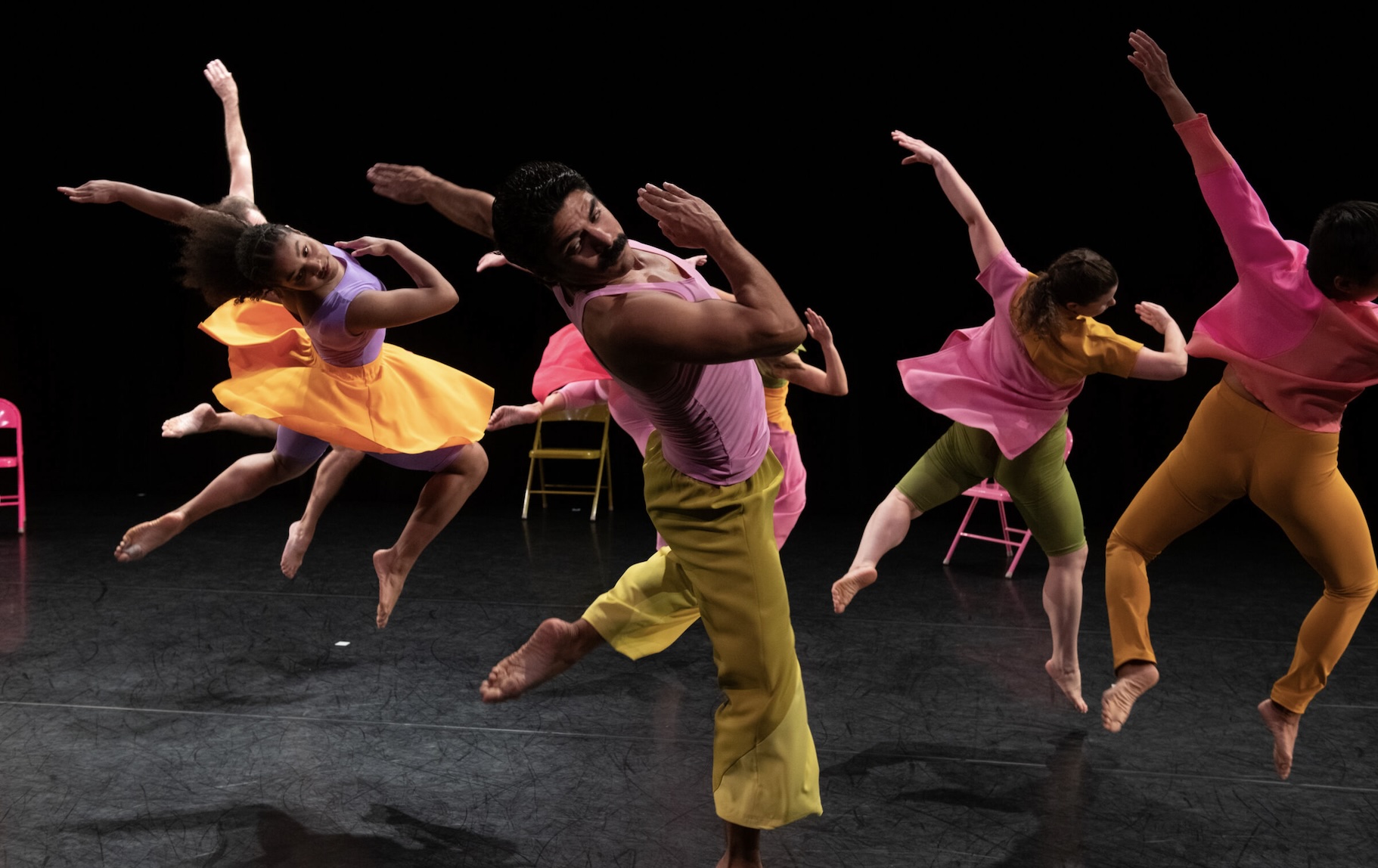
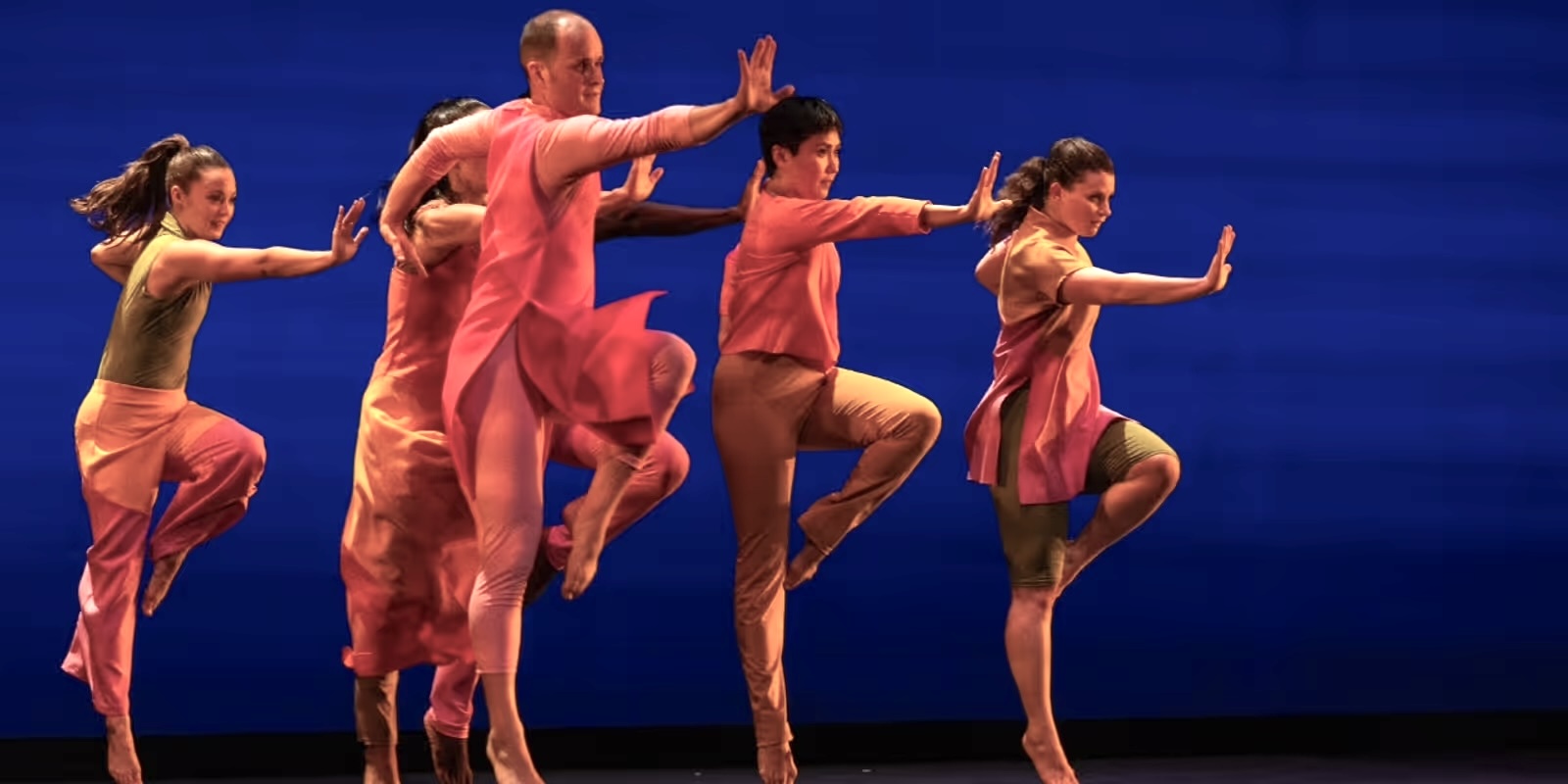
The dancers’ costumes were designed by Isaac Mizrahi, the radical fashion designer who gave America yoga pants. He made the collection diverse in color and cut to exceed the diversity in the dancers themselves. The flowing gowns and skirts on some of the dancers were amenable to movement, the costumes making their own contribution to the dance esthetic. Some of the other costume sets were based on tunics of varying lengths. Most of those made the dancer inside it look like they were trying to dance out of a cardboard box. Color took in the entire spectrum, tone and value ranging from pastel to fluorescent, emphasis on bright. When the lighting set on the scrim became fluorescent lemon yellow or lime green, the entire ensemble looked like a large mixed box of Jolly Rancher candies. But note the effect of the lighting set on “The Blob” piece earlier: the costumes were transformative with changes in the lighting. The costume collection probably was intentionally symbolic of the overall lightness of the program of popular music, and another kind of tribute to Burt Bacharach. Kudos to Isaac Mizrahi. He was also the production designer of the show. The lighting design was by Nicole Pearce. The music of the show was arranged entirely by pianist Ethan Iverson. All the music was used by permission.
Dance aficionados are well rewarded by the dance of Mark Morris. The wider public may delight in their own discoveries of Morris, a monument of American dance. He has always known what the world needs now.
The Look of Love
by Mark Morris Dance Company
touring company
January 17, 2026
January 27, 2026
Bass Concert Hall, Austin, Texas