ZAPATA, A FOLKLÓRICO SUPERHERO MUSICAL at the Zach Theatre - Interview with Playwright Jesse J. Sanchez, by Brian Paul Scipione
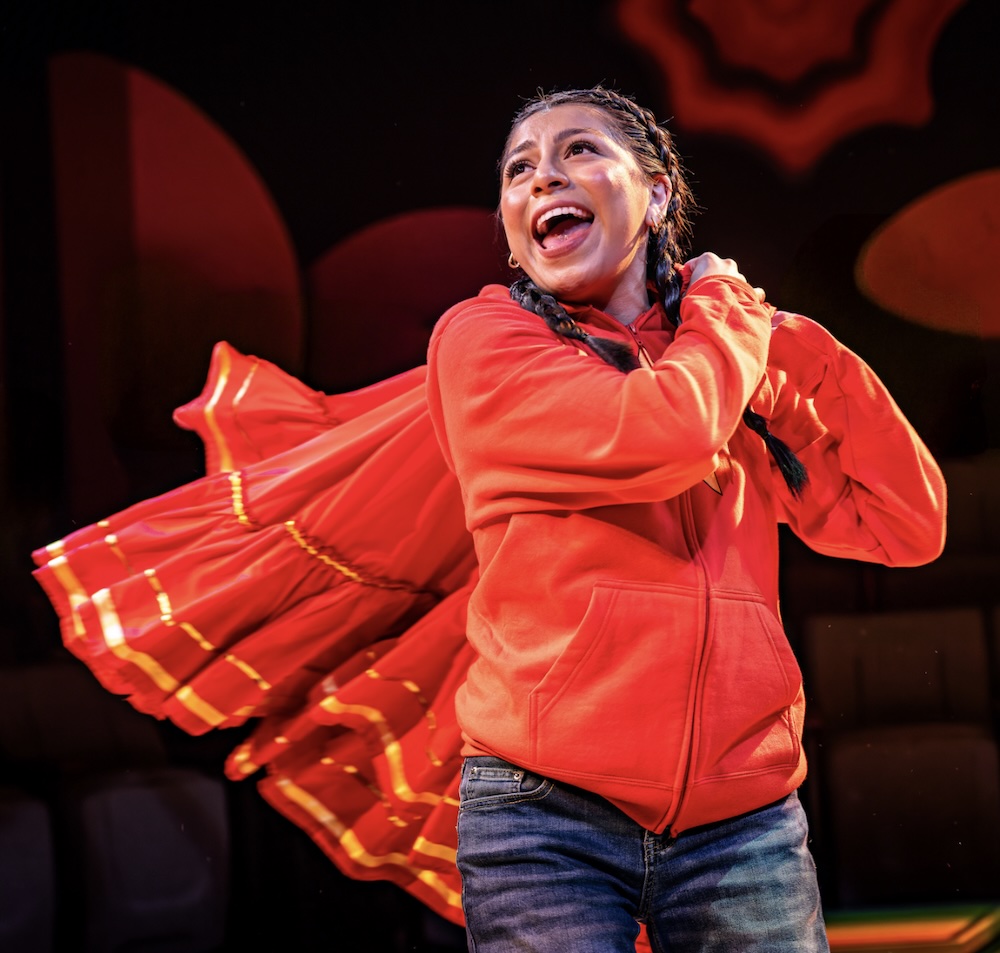 On March 27, 2026 Austin's Zach Theater debuted the world premiere of Zapata: A Folklórico Superhero Musical. It is the story of sixteen-year-old Xochitl who dreams of becoming a folklórico dancer. Her mother Ofelia, who is striving for success in America, thinks it’s more important fox Xochitl to fit into their home in the United States and focus on a practical future.
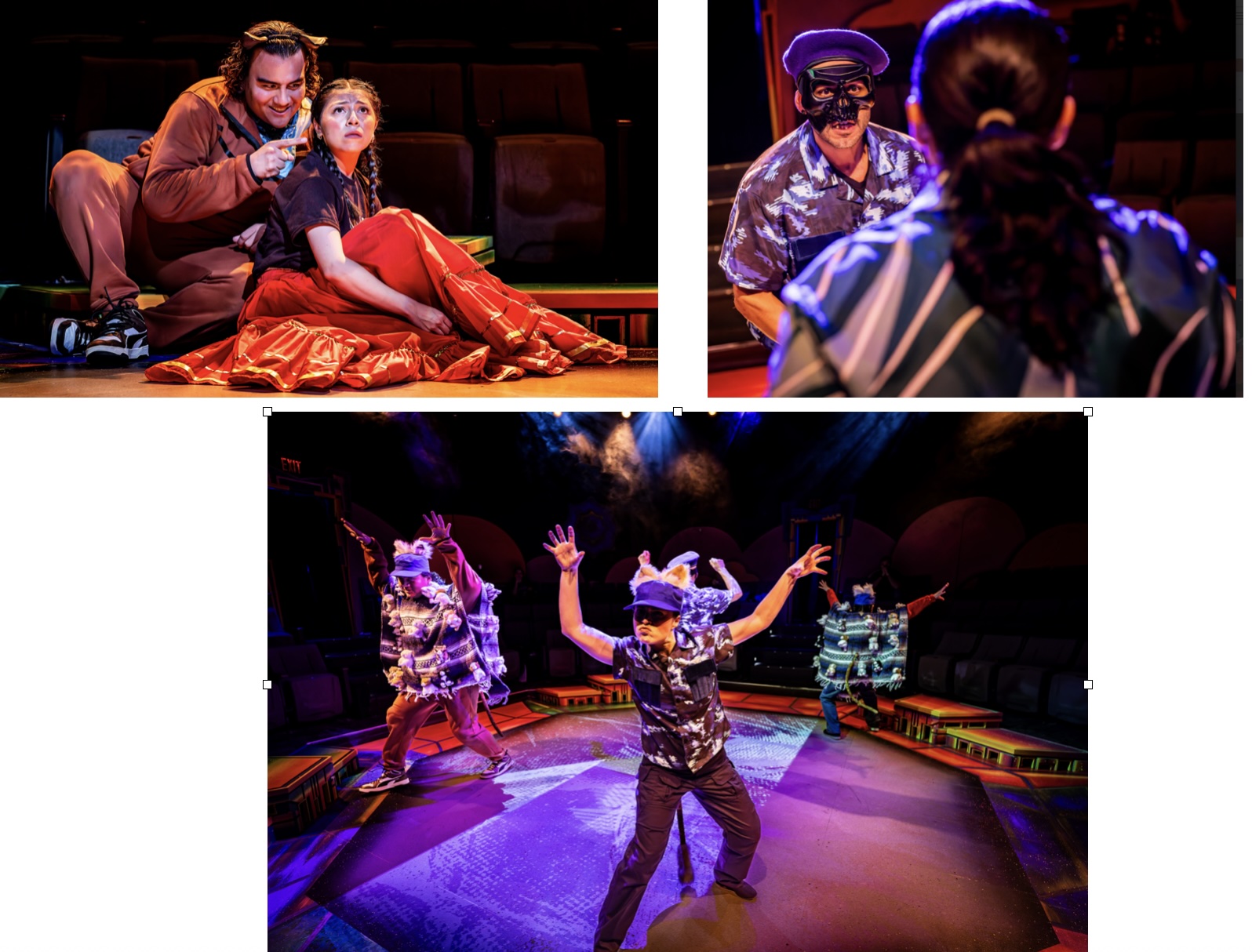
The play takes a dramatic turn when Ofelia is suddenly kidnapped by the villainous Helado (whose secret identity will be revealed later). It is up to Xochitl and her talking chihuahua sidekick to come to the rescue and learn about her true originsalong the way .
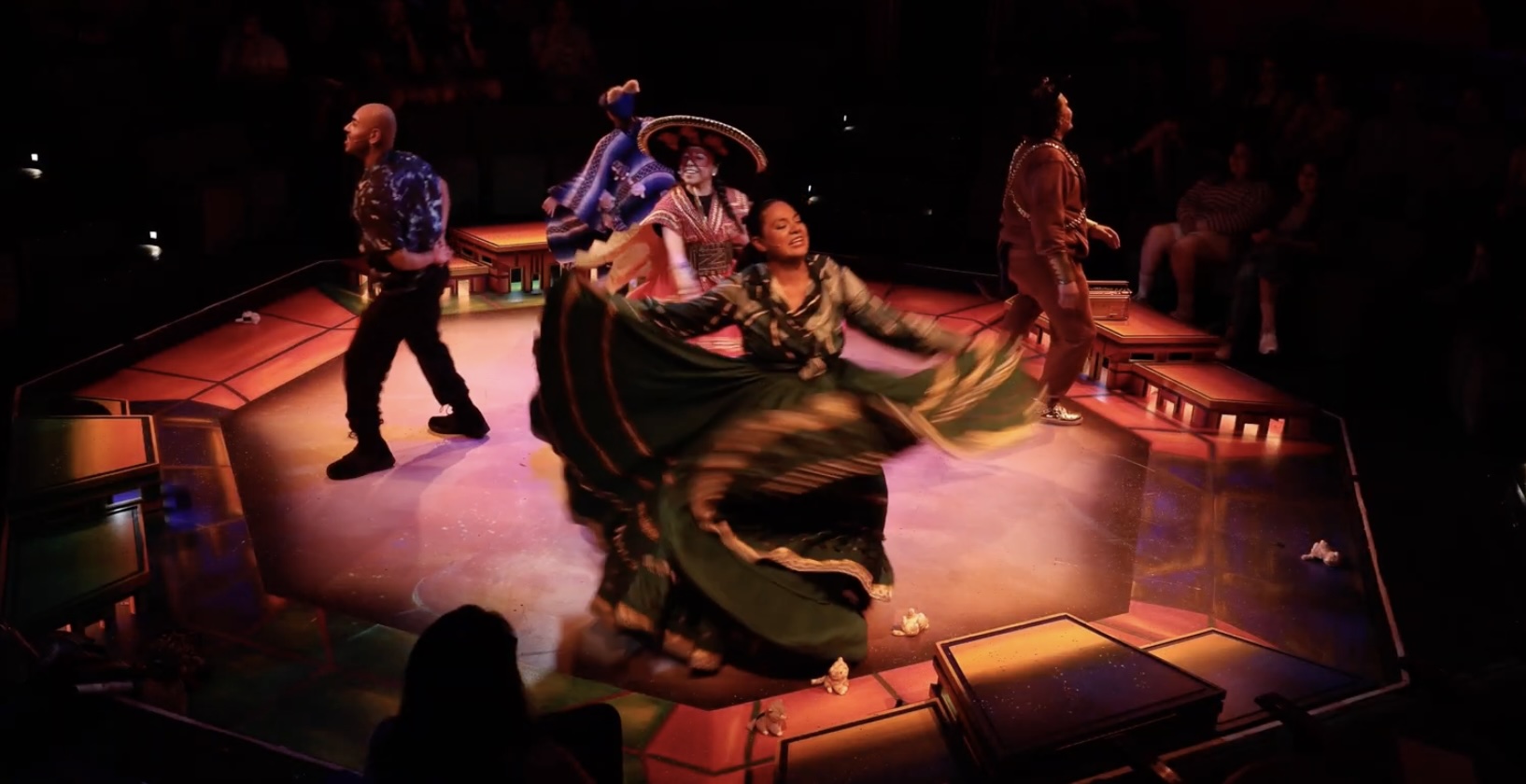
The Whisenhut theater in the round is equipped with four entrances and exits, and the captivating use of projections on the floor obviates the use of set pieces, adding an illuminating flair to Xochitl’s journey. The design liberates the playing space, making it possible to highlight the amazing dances peppered with fun dance battles. Audience participation, encouraged from the beginning, was enthusiastic and added to the fiesta atmosphere.
The production conceived, written, and composed by Jesse J. Sanchez and directed by Anna Skidis Vargas, was commissioned as part of the nationwide initiative by TYA/USA (Theatre for Young Audiences) and the BIPOC (Black, Indigenous, People of Color) Superhero Project. It was developed at Live & In Color, The Orchard Project, the Austin Latinx New Play Festival, and the NAMT Songwriters Showcase.
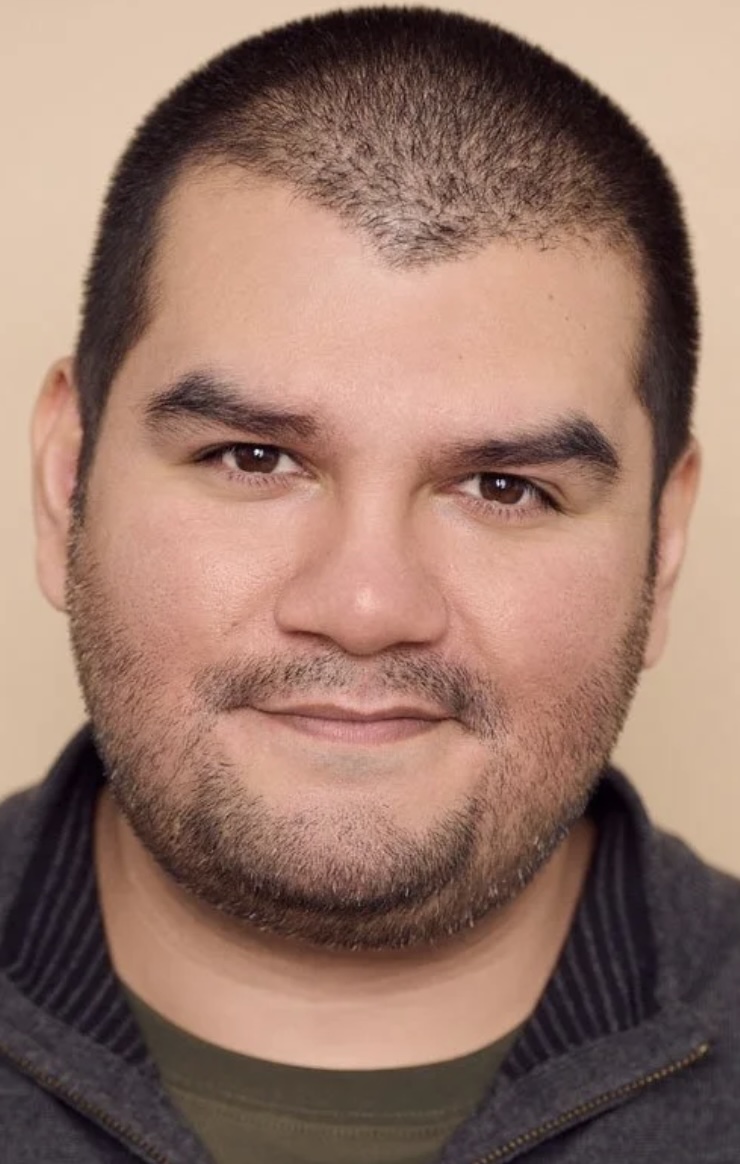
I was so blown away that I had to know more, so I reached out to the creator Jesse J. Sanchez. Jesse is a two-time recipient of the National Alliance for Musical Theatre Frank Young Grant and a recipient of the Milagro Latino Artist Fund Grant. He has worked as an associate producer at the Oregon Shakespeare Festival for nine seasons. I was fortunate enough get some insight into the elaborate creative process required to put all this together. Here's some of what he had to say.
 On the Traditions of Ballet Folklórico
The thing about folklorico is nothing is really set in stone, there’s dances from different regions, and those dances are usually what’s associated with it, but if you decide to change it no one’s going to be upset about it. That’s one of the things I discovered in my deep dive research early on. Ballet Folklórico all stems from Amalia Hernández and her school of training in Mexico. Certainly, there are even deeper conversations about taking indigenous dances and modernizing them, so I didn’t feel too bad about changing it from a male-female partner and changing it to two female presenting partners. I challenged them in that way to modernize it.
On Bringing Ballet Folklórico to a New Generation:
One of the things that I think is really unique about this show is creating a new vocabulary for the American theatre with the dance. We’ve never truly seen ballet folklórico and what that means mixed in with musical storytelling.
We ended up with having two choreographers, which was really wonderful because they both came with their own expertise. Matt (Kennedy), I call him the musical theater choreographer, he definitely infused a lot of the hip hop and different kind of styles to match the music and the storytelling. Mayra (Agis) she’s the folklorico genius who was able to show us all the traditional things. One of the things I challenged them with was how do we honor traditional Ballet Folklórico but also how do we switch up some of those old traditions? For example, there are dances that are traditionally done only by a male presenting person. We’ve kind of flipped it on its head. We are blurring all the lines and we are overlapping things.
On His Inspiration for the Story
I tried to pull from a lot of Aztec deities. How to pick just four or five regions when there are so many different kinds of cultures and subcultures in Mexico, including indigenous cultures? I had to come to terms with that I was only going to be able to represent a few of them, but I am representing the Mexican people, the Latinx people. Creating a superhero out of nothing comes with a lot of contradictions: what are their superpowers and how do those work? What is their kryptonite? What are their fears? What is the origin of their powers? So, there’s so much thought that goes into it. I take these outlines and blurbs and say here is where the action is going to be, and here’s where the climax will be. and all the things in between.
On the Never-ending Writing Process
When we went into rehearsals a lot of these things changed, and I found myself sitting in my hotel in Austin with my keyboard set up, just creating new things and writing new things. Then the next day we are telling the actors we are cutting these pages because they are going to be musicalized. That’s just the process of a new musical. The method of sitting in rehearsals all night and then going home and staying up till three of four in the morning just to be sure that all the pages work. I decided that I was going to compartmentalize and so from ten pm to 12 pm I’m just going to work on the book and then take a ten-minute break and then go back and start writing the music and then, at two in the morning, I’m going to orchestrate the music to put it into a track so that we can balance it so we can have it rehearsal the next day. There’s a lot of moving pieces. Zach really supported me. They gave me a writing assistant, and they gave me a great sound designer and other folks to support that process which allows me to do my best work.
On the Future of the Show
It was originally 120 pages, and I see this as the junior version, like Les Mis, Junior. I would love to be able to flesh it out to a bigger version. I have many more songs I can add. And the character of Helado, I would love to deepen that character. The exercise of this is what is essential. I can expand the narrative a little bit more. Broadway or even off-Broadway is a dream of mine, so if you know anybody… I am excited about it, and I think the message of the story is something we really need, and to put it on a bigger stage with more bells and whistles would just be so amazing for all ages to experience.
I would love, love to see it fully in Spanish and to see it on tour especially in the southern states: California, Arizona, and more of Texas. All the of Latinx parts of this country, Chicago even. I think this is just the beginning of this show, I truly do. People cannot deny good art that has a message for the current times.
The trend that I see is that we need small musicals that are produceable right now since we came back from the pandemic. We need things that are culturally relevant, of course. We need things that people are going to want to come see. I wanted to give schools and other universities that can’t afford a band or musician an option by giving them some decently made tracks. In a bigger theater I would love a big band—that would be the icing on the cake. We have not seen mariachi or cumbia in musical theater. I would love, love, love to see a live band, and another hope and dream is to have a bigger ensemble with local folklórico groups who are traditional to folkllórico songs coming in, since they know these songs. Those are not my songs, the rest of the songs are my music. It would be so wonderful to see people who see themselves in it.
On the Amazing Floor Projections
They did a really great job! When I put those things in the script, my director [Anna Skidis Vargas] said, “You are writing a movie for me!” But the reason I wanted projections is because I’m gearing this to young folks. Young people and adults are so used to looking at their phones that the moment that they see projections on the floor they will just say, 'Oh, okay,' and continue to watch literally what’s on the stage. It was kind of strategic and for me. The team really pulled through. Even the sound—they really balanced those mikes against the tracks.
Final Thoughts
I just want to highlight that the story is flipped. It’s usually the parent saying, 'Come and be part of your culture,’ but it’s flipped, and Xochitl is craving her culture and her Mom’s, like, 'No!' This was very intentional and modern. Many generations have gone by where the grandparents and the parents had to assimilate but then there’s this point where the youth are seeking a reclamation of their culture. We are seeing more and more of that now. I want to lean into my Latinidad, I want to lean into my Mexican-ness. How do I do that when people judge me because I never did before? I just wanted to show that it’s okay to do that because that’s who you are. I feel that it’s important for other people to see this.
Special Thanks
I’d like to give a shout out to my director [Anna Skidis Vargas]. She’s been on this journey just as long as I have. This show would not be where it is without her, because of her brilliant mind and the team that she brought on. And Jenny Lavery, who helped put together a lot of these people; we wouldn’t have these actors without her. They are all really great, and they came with a lot of special skills.
Zapata - A Folklórico Superhero Musical
by Jesse J. Sanchez
Zach Theatre
March 27 - April 26, 2026
March 27 - April 26, 2026
Opening Friday, March 27 at 7 p.m.
Performances Saturdays and Sundays
Whisenhut Stage, Zach Theatre, Austin
AGE RECOMMENDATION
5 & up
Runtime 50 minutes with no intermission
- Pay What You Wish – limted number of tickets are available while inventory lasts beginning Friday, March 27
- Press Night and Champagne Opening – Friday, March 27, 2026 at 7:00 pm.
- ASL Performance – Sunday, April 26, 2026 at 12:00 pm